
SAFETY
Practice recognizing immediate risks, responding to changes in condition, questioning unsafe situations, and choosing the action that prevents harm.
-
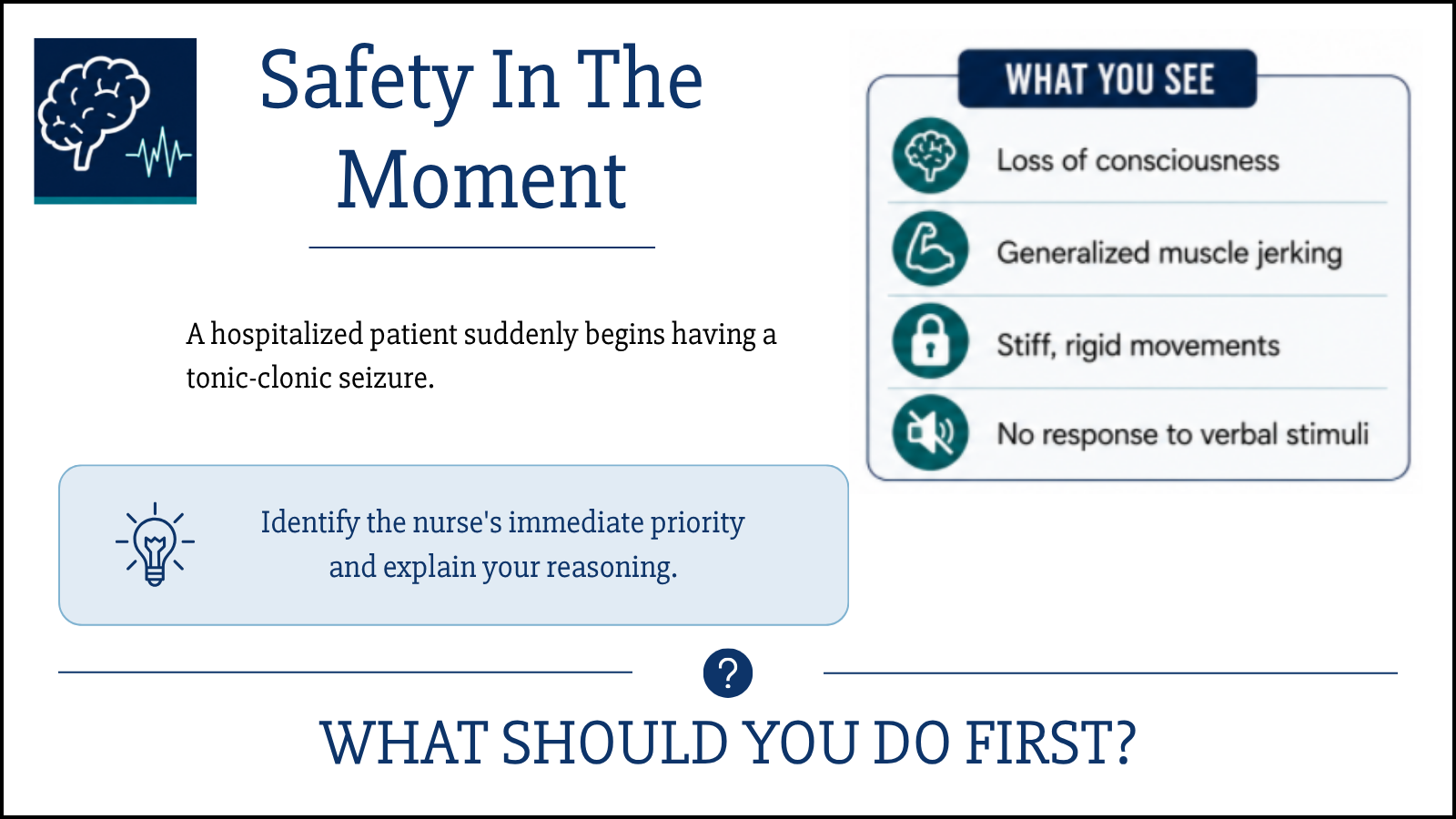
Priority Action:
Protect the patient from injury while the seizure is occurring.Why this matters:
The patient is actively having a tonic-clonic seizure and cannot control their movements or protect themselves. The nurse's immediate priority is to maintain safety during the seizure.Stay with the patient, protect the head, remove nearby objects that could cause injury, and lower the patient safely if needed. If possible, position the patient on their side to help maintain a patent airway and allow secretions to drain. Do not restrain the patient's movements or place anything in the mouth.
The nurse should also note the time the seizure began and observe its characteristics. Once the seizure ends, assess airway, breathing, oxygenation, neurologic status, and the patient's response.
Don't get distracted by:
Trying to perform a detailed assessment while the patient is actively seizing. Important assessment comes afterward; during the seizure, the immediate priority is preventing injury and supporting airway and breathing.CLINICAL JUDGMENT TAKEAWAY
During an active seizure, protect the patient from immediate harm. Stay with the patient, maintain safety and airway support, and complete a focused assessment once the seizure activity ends.
-
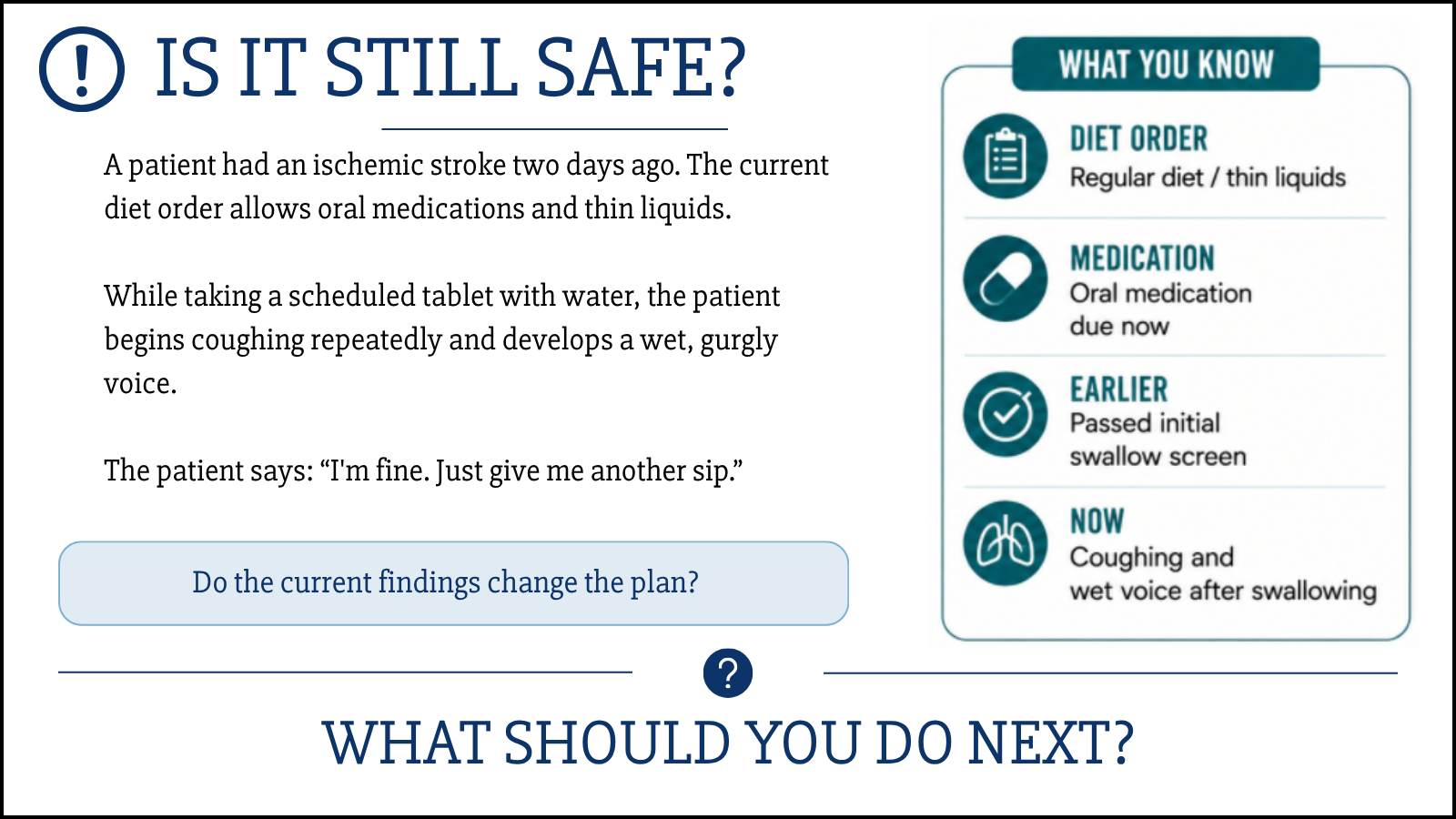
Priority Action:
Stop giving the patient anything by mouth and reassess swallowing safety.Why this matters:
The patient's coughing and wet, gurgly voice are new findings that suggest swallowing may no longer be safe. Even though the patient previously passed a swallow screen and has an order for oral medications and thin liquids, the nurse should respond to what is happening now.Continuing to give water or medication could increase the risk for aspiration. The nurse should stop oral intake, assess the patient's respiratory and neurologic status, keep the patient appropriately positioned, and follow facility protocol for further swallowing evaluation and provider notification.
Don't get distracted by:
The previous swallow screen or current diet order. Those reflect the patient's condition at an earlier point in time. New assessment findings can mean the plan needs to change.CLINICAL JUDGMENT TAKEAWAY
A previous assessment or existing order does not override a new safety concern. When the patient's condition changes, stop and determine whether the current plan is still safe.
-
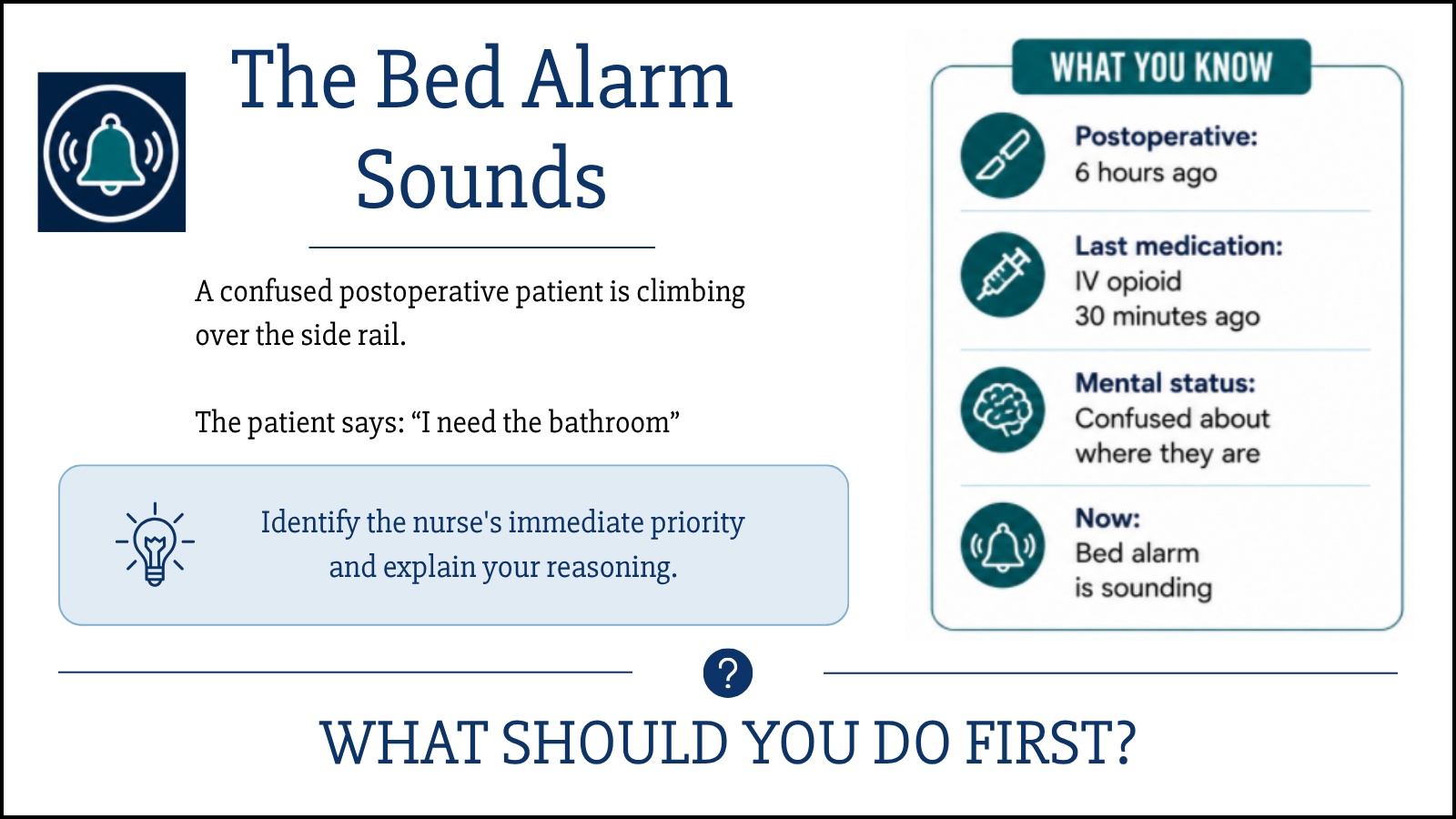
Priority Action:
Stay with the patient and immediately assist them back to a safe position.Why this matters:
The patient is confused and already attempting to climb over the side rail. Recent surgery and opioid administration add to the concern, but you do not need additional assessment data to recognize the immediate danger: the patient could fall and be injured.The nurse should remain with the patient, prevent them from climbing out of bed, and assist them to a safe position. Once the immediate danger is controlled, the nurse can address the need to toilet, assess the patient's mental and physical status, and determine what additional fall-prevention measures are needed.
Don't get distracted by:
The reason the patient is trying to get up. Needing to use the bathroom is important, but the first priority is preventing the patient from falling while attempting to get there.CLINICAL JUDGMENT TAKEAWAY
When a patient is already in an unsafe situation, prevent immediate harm first. Once the patient is safe, assess what contributed to the situation and address the underlying need.
-
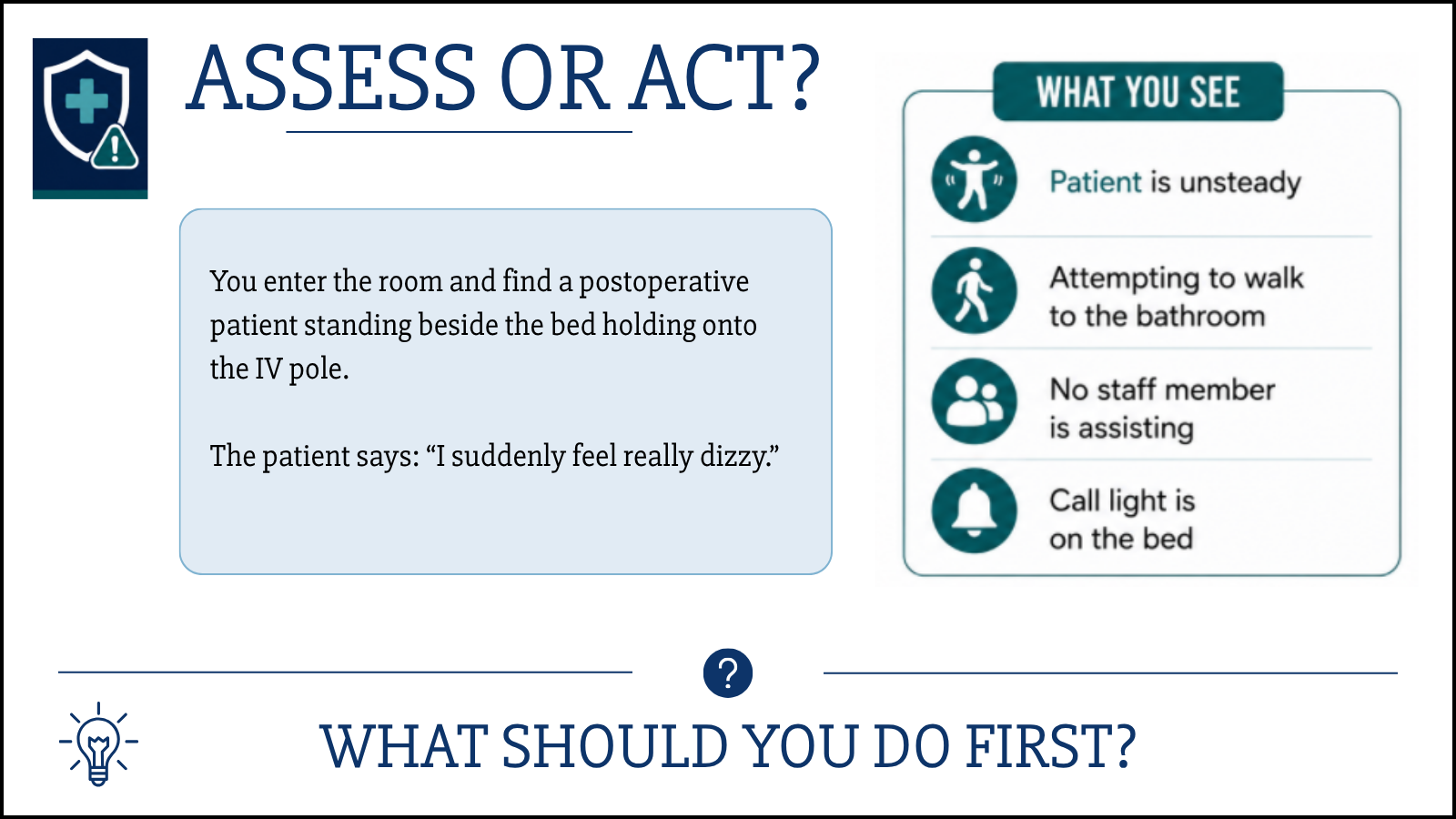
Priority Action:
Immediately assist the patient back to bed or into a safe seated position.Why this matters:
The patient is dizzy, unsteady, and already standing without assistance. The immediate problem is the risk for a fall. Before gathering additional assessment data, the nurse needs to prevent an injury that could happen within seconds.Once the patient is safely positioned, the nurse can assess vital signs, evaluate the dizziness, and determine what may be causing the change in condition.
Why not assess first?
Assessment is important, but it should not delay an action needed to prevent immediate harm. Taking a blood pressure while the patient remains standing and unstable leaves the safety threat in place.CLINICAL JUDGMENT TAKEAWAY
“Assess first” is not an absolute rule. When an immediate safety threat is already clear, protect the patient from harm first, then assess what caused the problem.