

PRIORITIZATION & DELEGATION
Practice deciding what matters most, what should happen first, and who is the right person to provide the care.
-
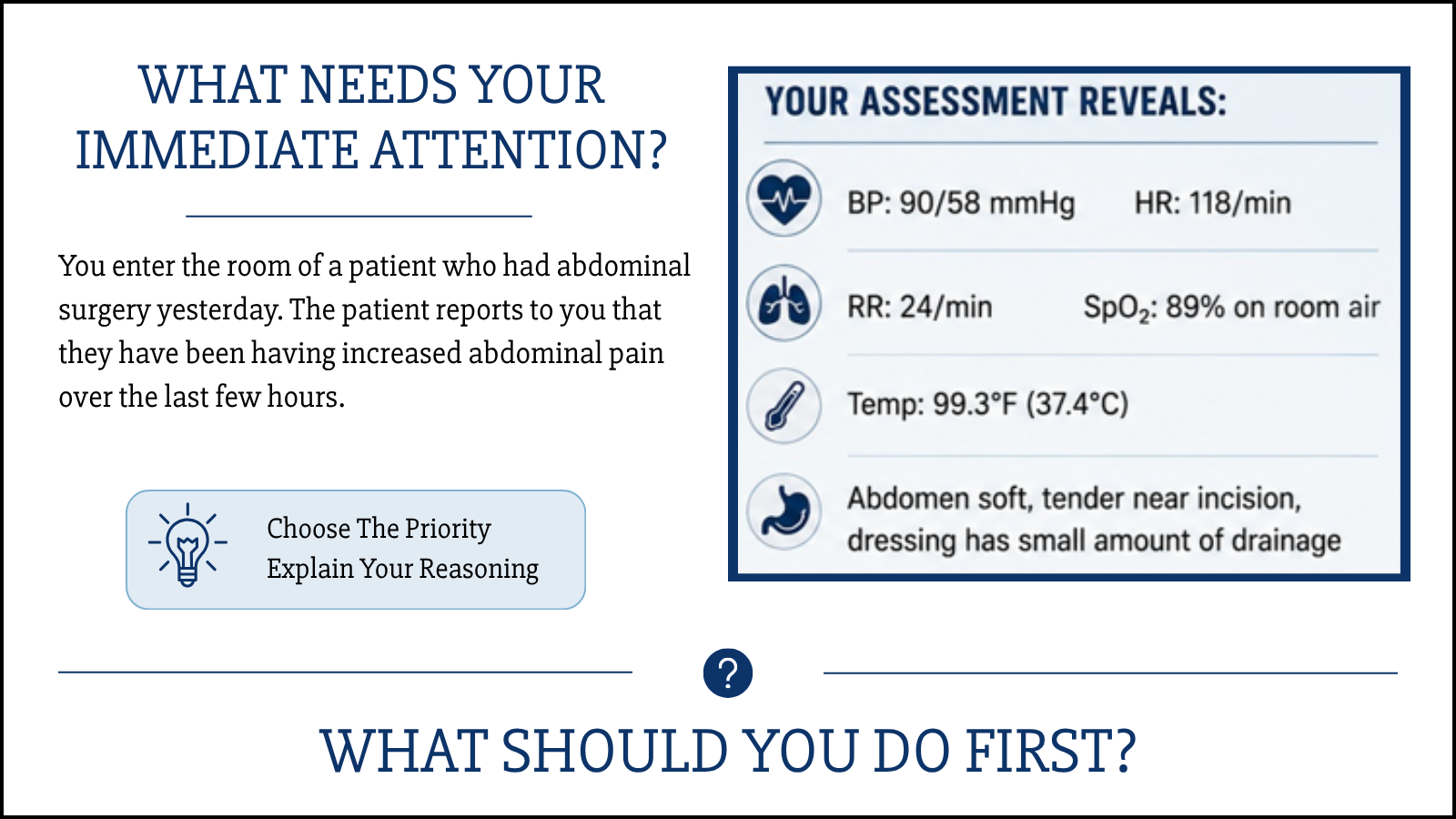
Priority Action:
Address the patient's oxygenation and signs of hemodynamic instability first. Apply supplemental oxygen, ensure the patient is safe in bed, and rapidly assess for evidence of postoperative deterioration while escalating care as indicated.Why this matters:
The increasing abdominal pain is concerning, but it becomes much more significant when you connect it with the other findings. The patient is hypotensive (90/58 mmHg), tachycardic (118/min), tachypneic (24/min), and hypoxemic (SpO₂ 89% on room air).Together, these findings suggest the patient may be experiencing a serious postoperative complication and is showing signs of impaired oxygenation and perfusion. This is not a situation where the nurse should focus only on treating the pain or inspecting the incision.
Don't get distracted by:
The soft abdomen, mild incisional tenderness, or small amount of drainage. Those findings may be expected after abdominal surgery, but they do not outweigh the patient's abnormal vital signs and low oxygen saturation.CLINICAL JUDGMENT TAKEAWAY
Connect the findings. When several abnormalities point to impaired oxygenation or perfusion, address the immediate physiologic threat rather than the most obvious complaint.
-
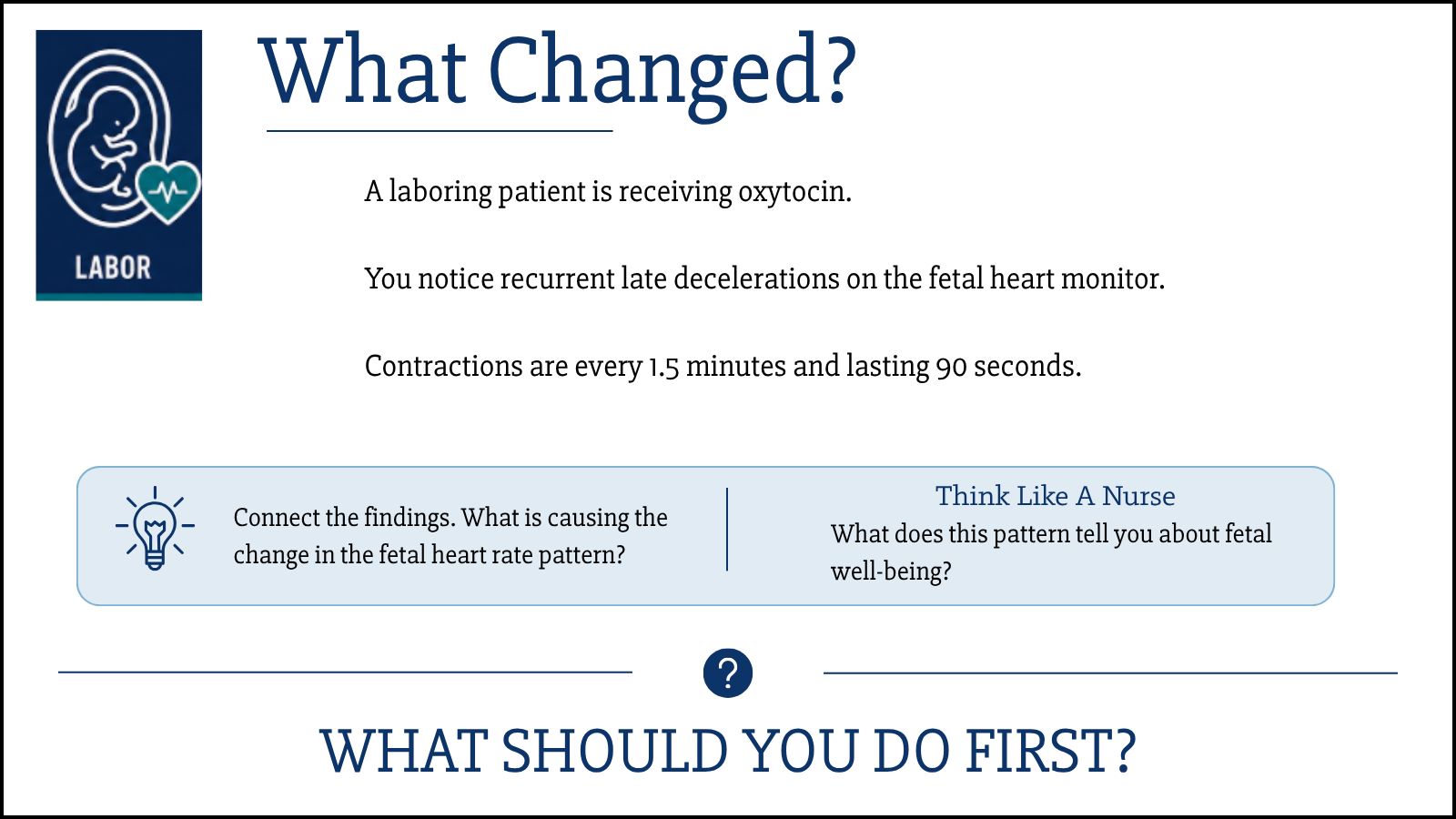
What is likely happening:
The patient is experiencing uterine tachysystole associated with the oxytocin infusion, which is contributing to recurrent late decelerations.What should happen first:
Stop the oxytocin infusion. Then reposition the patient to a lateral position, increase the primary IV fluid as appropriate, continue evaluating the fetal heart rate and contraction pattern, and notify the provider if the pattern does not resolve or additional intervention is needed.Why this matters:
Contractions occurring every 1½ minutes and lasting 90 seconds leave very little time for uteroplacental blood flow to recover between contractions. The recurrent late decelerations indicate that the fetus may not be tolerating the contraction pattern well.Because oxytocin is stimulating the contractions, continuing the infusion could worsen the problem. The priority is to remove the likely cause of excessive uterine activity and improve uteroplacental perfusion.
CLINICAL JUDGMENT TAKEAWAY
When a treatment may be contributing to a change in the patient's condition, don't just respond to the new finding, identify and address the cause.
-
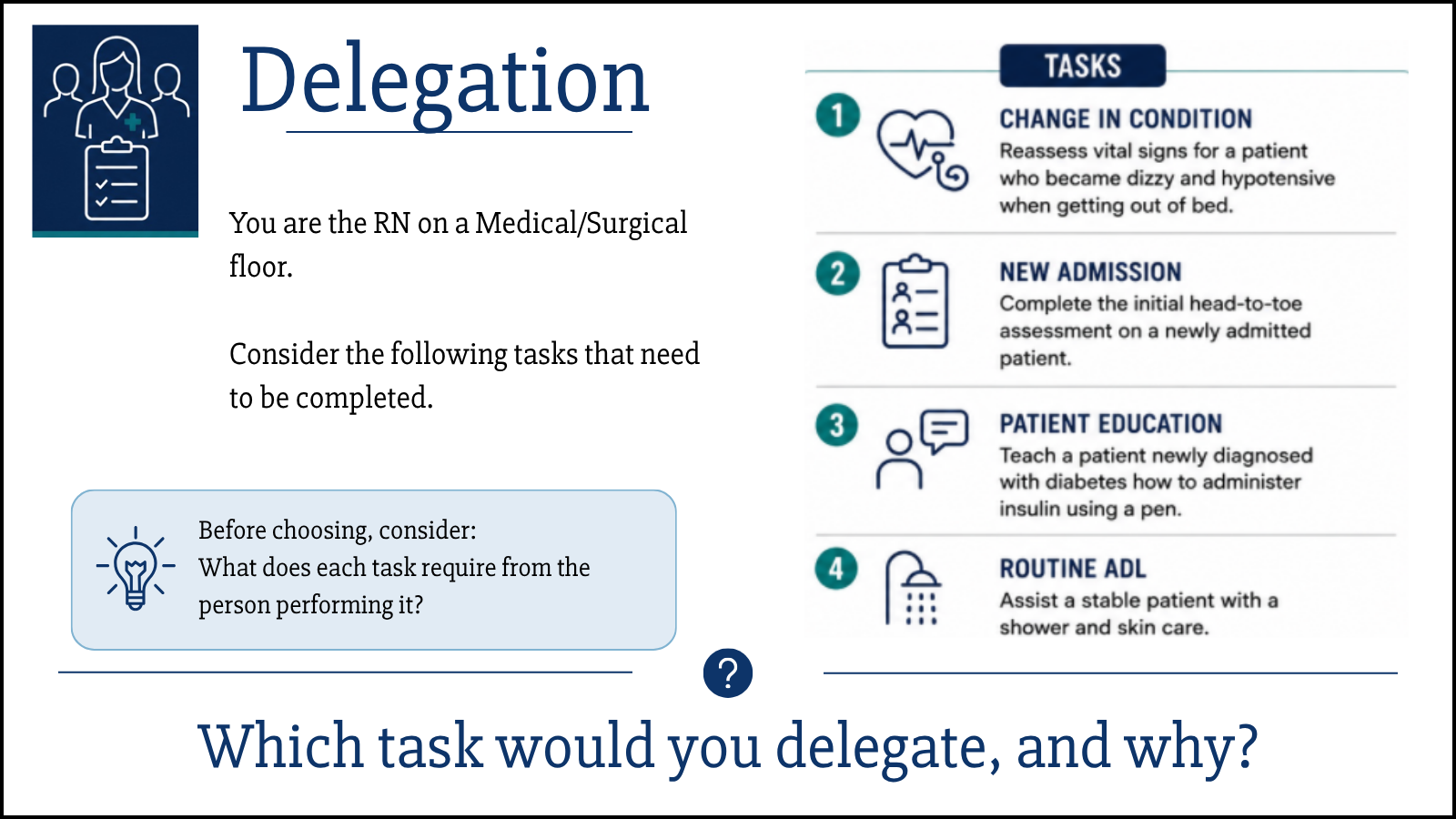
Best Choice: Routine ADL
The RN can safely delegate assisting the stable patient with a shower and skin care to unlicensed assistive personnel (UAP).
Why this matters:
This patient is stable, and the task involves routine care that does not require nursing assessment, clinical judgment, or patient teaching.The other tasks require the RN:
Reassessing the dizzy, hypotensive patient requires nursing assessment and evaluation of a change in condition.
Completing the initial head-to-toe assessment requires an RN assessment and clinical judgment.
Teaching a newly diagnosed patient to use an insulin pen involves initial patient education and evaluation of learning.
CLINICAL JUDGMENT TAKEAWAY
Delegate predictable, routine tasks for stable patients. Keep tasks that require assessment, clinical judgment, evaluation, or initial teaching with the RN.
-
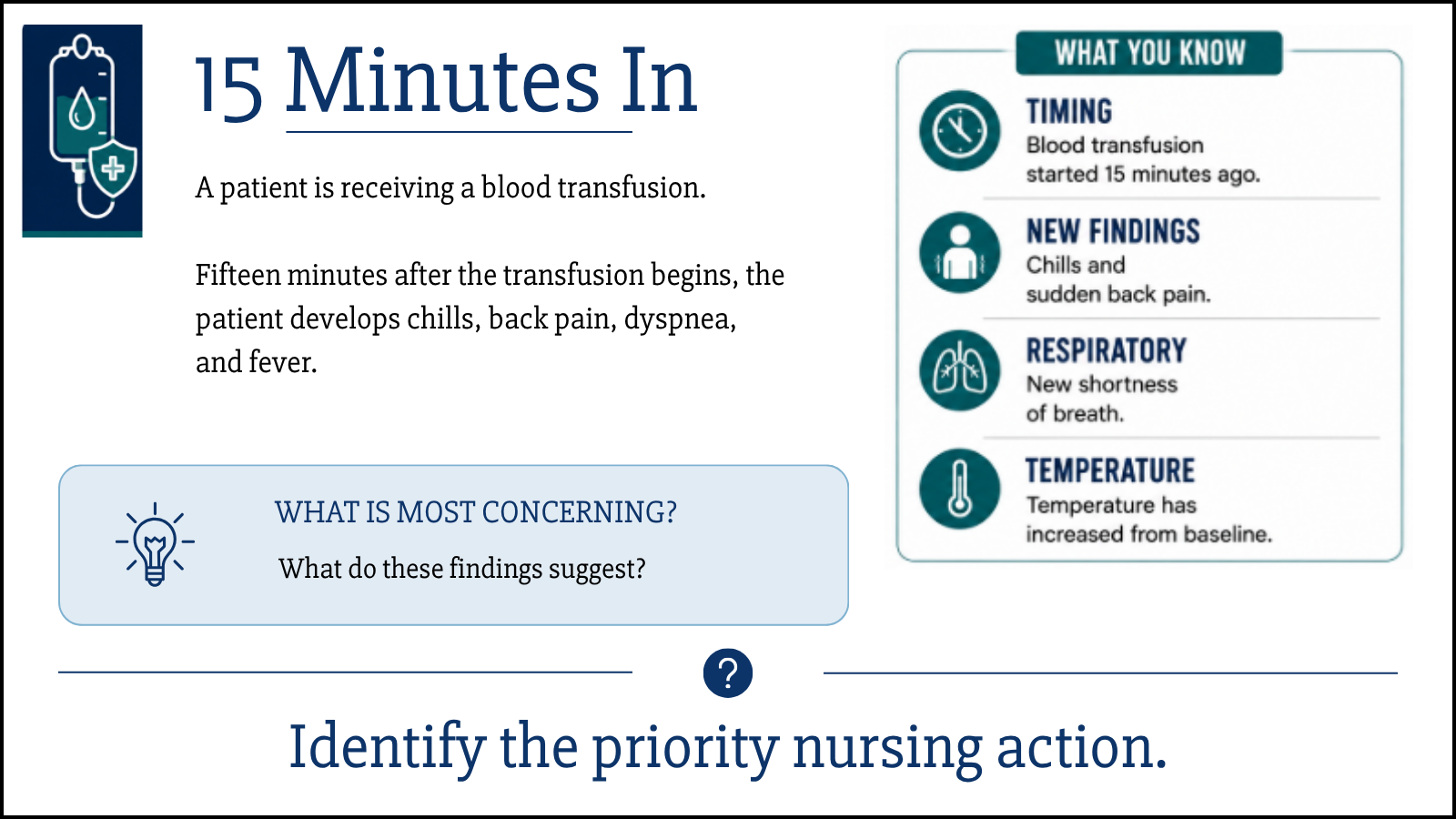
What is most concerning:
The timing and combination of chills, sudden back pain, dyspnea, and fever shortly after the transfusion begins are concerning for an acute transfusion reaction.What should happen first:
Stop the blood transfusion immediately.Why this matters:
Continuing the transfusion could expose the patient to more of the blood product and worsen the reaction. The priority is to stop the source of the suspected problem first.After stopping the transfusion, the nurse should maintain IV access with normal saline using new tubing, assess the patient, monitor vital signs and respiratory status, and notify the provider and blood bank according to facility protocol.
CLINICAL JUDGMENT TAKEAWAY
When a treatment is the likely cause of an acute change in condition, stop the source of harm first, then assess, stabilize, and escalate care.
-
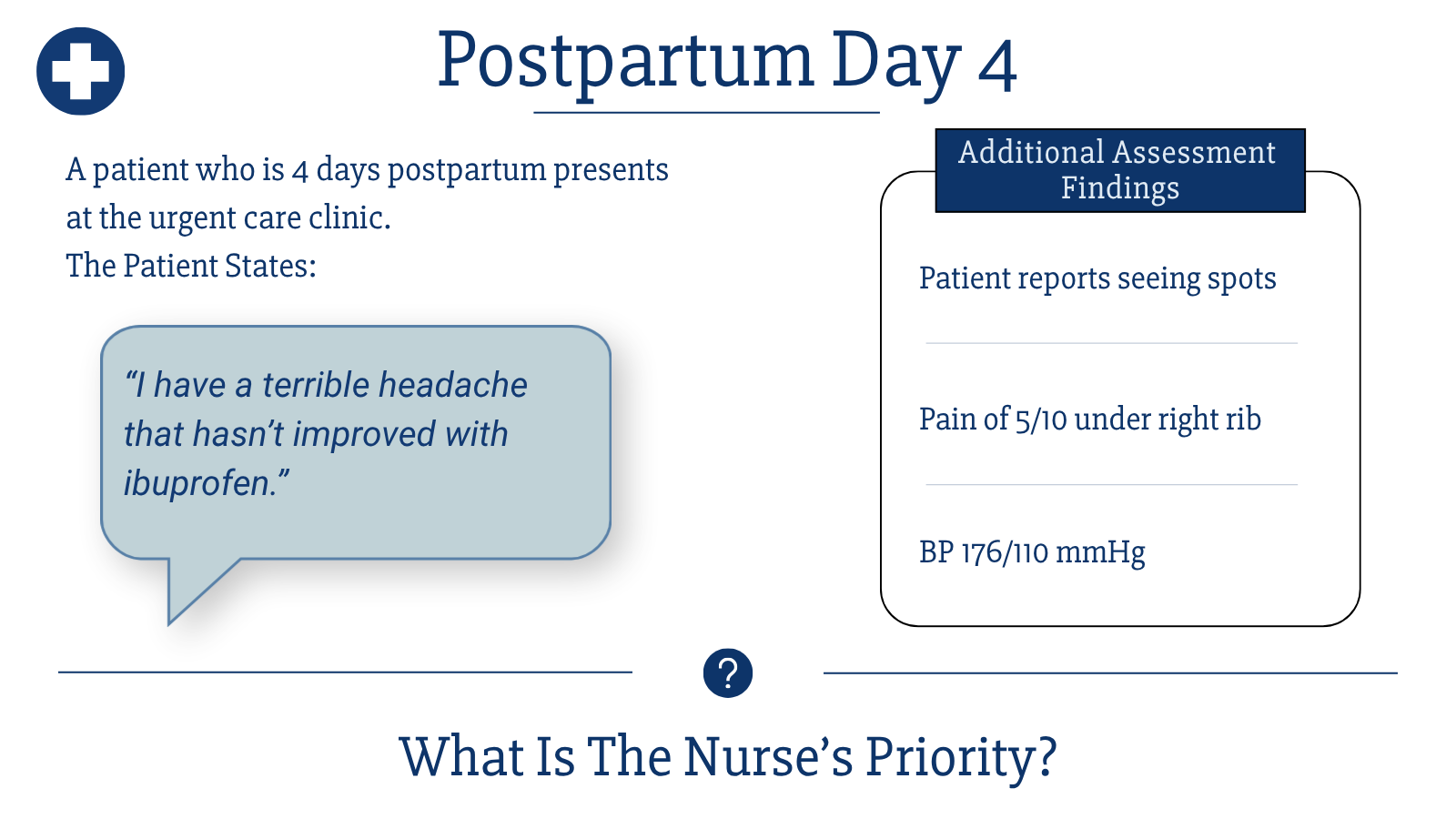
The headache is not the priority finding by itself. The concern is the combination of severe hypertension, persistent headache, visual disturbances, and epigastric pain in a patient four days postpartum.
A blood pressure of 166/110 mmHg is severe range. The headache that has not improved with medication and the visual spots raise concern for neurologic involvement. Epigastric or right upper-quadrant pain raises concern for hepatic involvement. Together, these findings are concerning for postpartum preeclampsia with severe features.
The nurse should recognize this as an urgent maternal safety concern and immediately escalate according to facility protocol. Further assessment should include repeat blood pressure, neurologic status, reflexes/clonus, respiratory status, urine output, and relevant laboratory results.
DO NOT GET DISTRACTED BY
The assumption that preeclampsia only occurs before delivery. Hypertensive disorders can develop or worsen postpartum, and new headache, visual changes, and upper abdominal pain should never be dismissed as expected postpartum discomfort.