

MEDICATIONS AND LABS
Connect lab results and medications to the patient's current condition. Practice recognizing when a result matters, when a medication may need to be held, and when something requires follow-up.
-
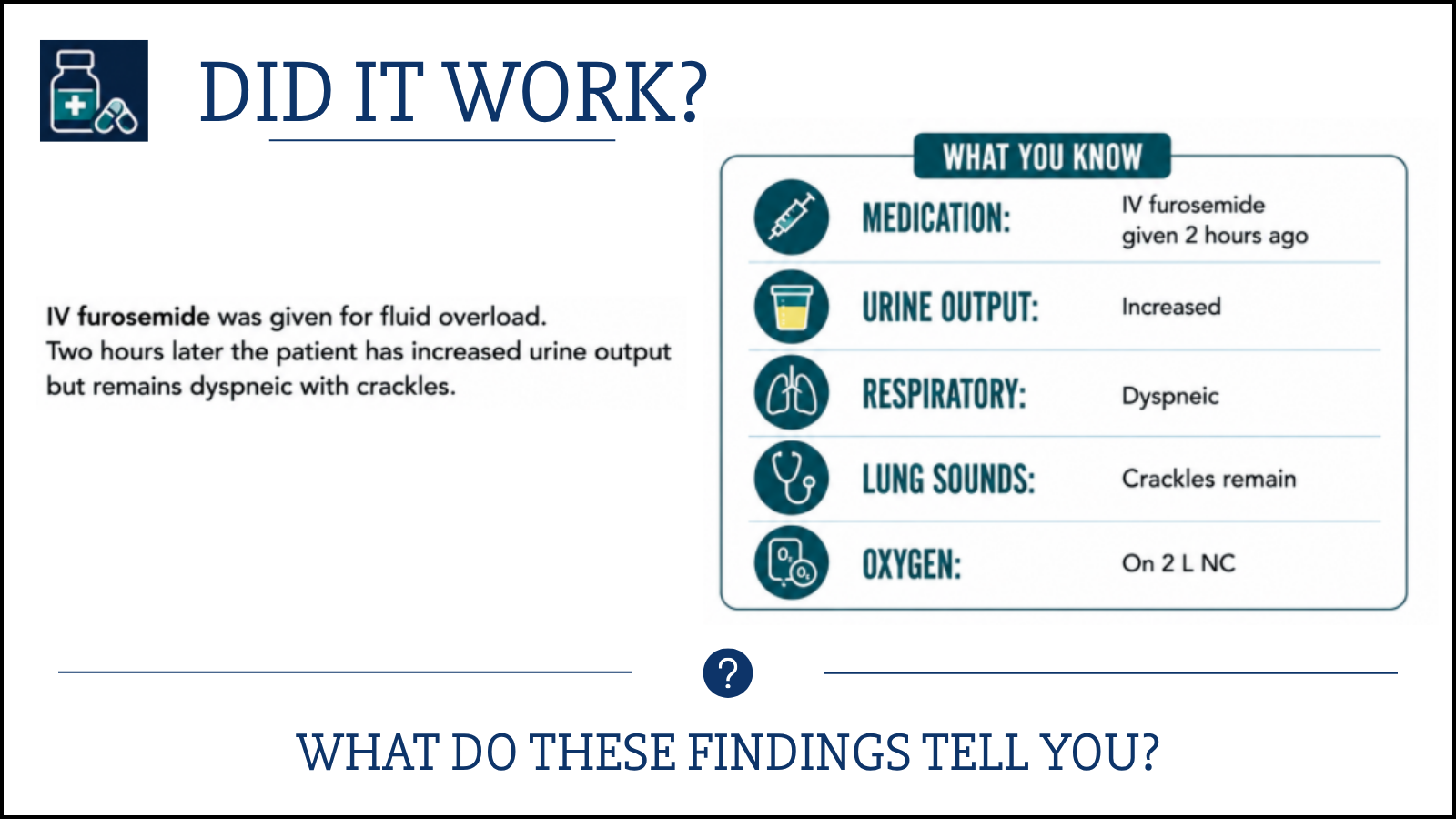
Did the Treatment Work?
The patient has responded to the furosemide, but the overall clinical problem has not fully improved.Why this matters:
The increased urine output tells you the medication is producing its expected diuretic effect. But medication effectiveness isn't determined by one expected response alone.The reason the patient received furosemide was to reduce fluid overload and improve the effects that excess fluid was having on the patient. The patient remains dyspneic and still has crackles, which suggests the fluid overload has not fully resolved.
The nurse should continue to assess the patient's respiratory status, oxygenation, lung sounds, fluid balance, vital signs, and overall response to treatment. Continued or worsening respiratory symptoms may require additional intervention and provider notification.
Don't get distracted by:
The increased urine output. Producing more urine shows that the medication is having an effect, but that doesn't necessarily mean the desired patient outcome has been achieved.CLINICAL JUDGMENT TAKEAWAY
Don't evaluate a medication only by whether it produced an expected effect. Ask whether the patient's actual clinical problem improved.
-
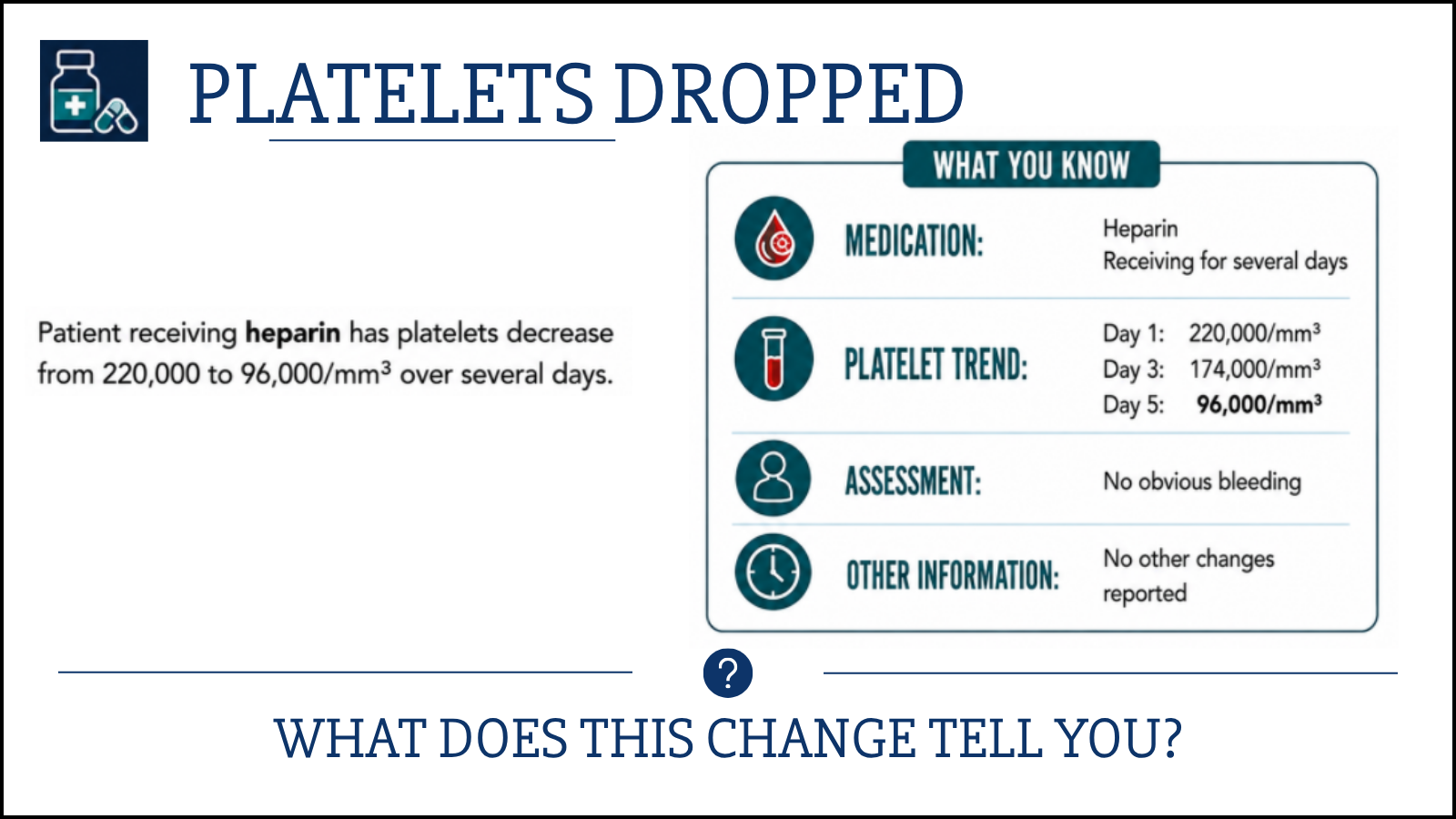
What Do You Notice?
The platelet count has dropped substantially while the patient has been receiving heparin, which raises concern for heparin-induced thrombocytopenia (HIT).Why this matters:
The platelet count has fallen from 220,000 to 96,000/mm³, a decrease of more than 50%. In a patient who has been receiving heparin for several days, that pattern is concerning for HIT.HIT is important because the major danger is not simply a low platelet count or visible bleeding. It is an immune-mediated reaction that can significantly increase the patient's risk for thrombosis.
The nurse should stop heparin and notify the provider promptly, assess the patient for signs of thrombosis, and anticipate further evaluation and an alternative anticoagulant as prescribed.
Don't get distracted by:
The absence of obvious bleeding. A patient with HIT may have no visible bleeding, and the platelet count does not have to fall to an extremely low level. The degree of decline, timing, and heparin exposure are important clues.CLINICAL JUDGMENT TAKEAWAY
Don't look only at whether a lab value is abnormal. Look at how much it changed, when it changed, and what was happening with the patient when it changed.
-
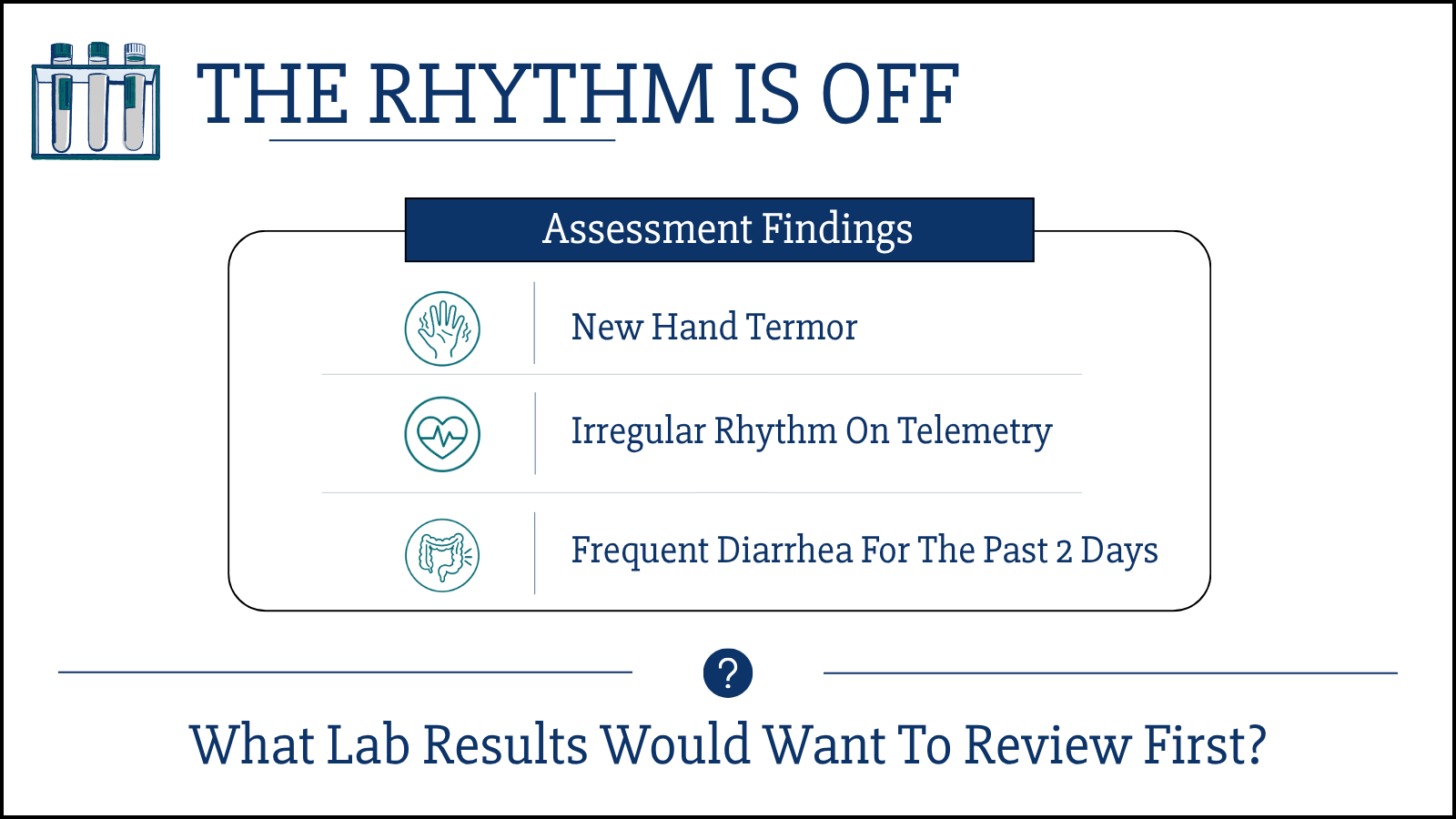
The nurse recognizes that frequent diarrhea can cause fluid and electrolyte losses. Because the patient now has tremors and an irregular rhythm on telemetry, the nurse reviews the morning laboratory results to look for an electrolyte imbalance that could help explain the change.
The magnesium level is 1.2 mg/dL, which is low.
Magnesium plays an important role in neuromuscular and cardiac function. When it is low, patients may develop findings such as tremors, weakness, muscle cramps, or changes in cardiac rhythm. The low magnesium helps connect the patient’s recent GI losses with the new assessment findings.
The nurse should also remember that electrolyte abnormalities can occur together. In a patient with ongoing diarrhea, potassium and other relevant lab values should be reviewed as well. The nurse should assess the patient’s symptoms and rhythm, follow facility policy, and notify the provider or escalate concerns as appropriate.
CLINICAL JUDGMENT TAKEAWAY
When new symptoms develop, look for the information that connects them. Here, the patient’s diarrhea, tremors, irregular rhythm, and magnesium of 1.2 mg/dL tell one clinical story.
-
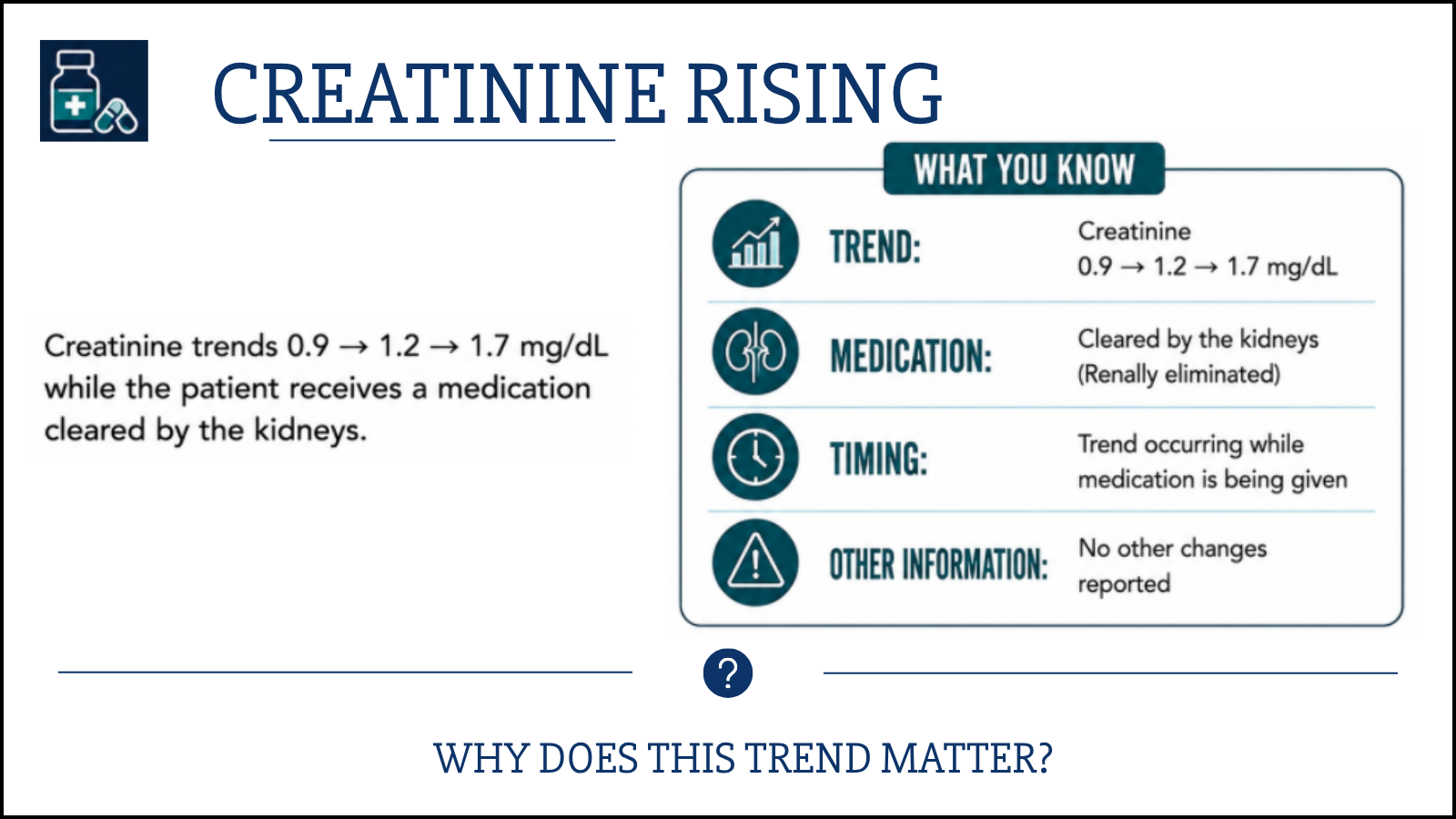
The key finding is the trend. Creatinine has nearly doubled from the patient’s baseline of 0.9 mg/dL to 1.7 mg/dL while the patient is receiving a medication cleared by the kidneys.
Creatinine is not just a number to label as high or low. It gives the nurse information about how well the kidneys may be filtering and clearing substances from the body. A steady rise suggests that renal function may be declining, even if the patient does not yet appear acutely ill.
Now connect that trend to the medication. If the kidneys are not clearing the medication as effectively, each scheduled dose may remain in the body longer. Repeated doses can build up, increasing the risk for adverse effects or toxicity—depending on the specific medication.
The nurse should not assume the medication is safe simply because it has been given before or because the next dose is scheduled. Instead, pause and gather a fuller picture:
Has urine output decreased?
Is the patient dehydrated, vomiting, having diarrhea, hypotensive, or showing signs of fluid overload?
Have other kidney-related labs changed?
Is the patient receiving contrast, NSAIDs, diuretics, antibiotics, or other potentially nephrotoxic medications?
Does this medication require a renal dose adjustment, a longer dosing interval, or clarification before the next dose?
The important clinical-judgment step is recognizing that the creatinine change may alter the safety of a treatment already in progress. The nurse should review the medication information and facility guidance, assess the patient, and notify the provider or pharmacist as appropriate before administering a dose that could accumulate.
-
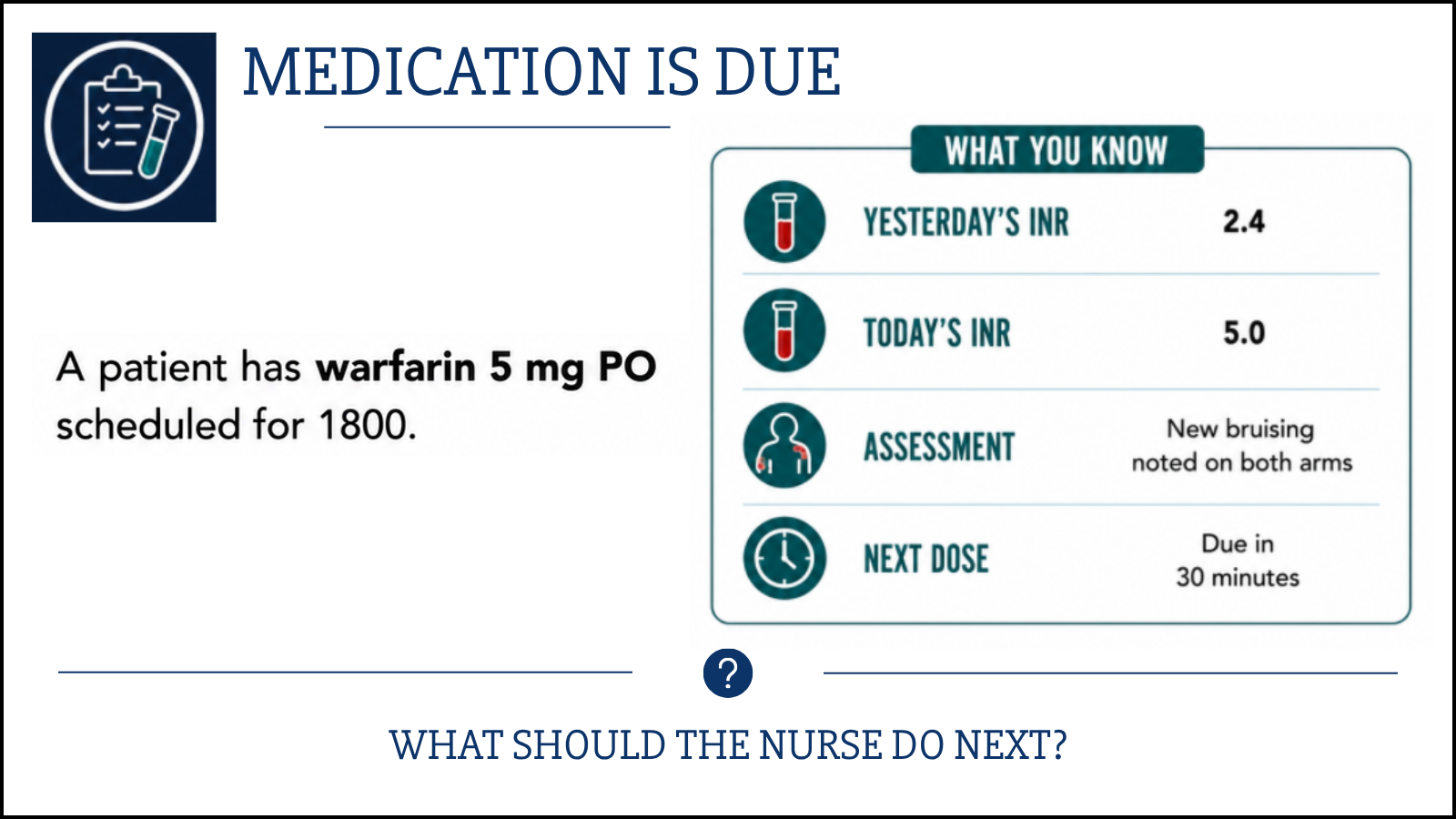
The important change is not just that today’s INR is high. It is that the INR has increased from 2.4 to 5.0 while the patient is taking warfarin, and the patient now has new bruising.
Warfarin reduces the blood’s ability to clot. When the INR rises too high, the patient is at greater risk for bleeding. New bruising may be an early sign that the anticoagulant effect is already stronger than intended.
The nurse should connect the lab result, trend, medication, and assessment finding:
The INR is significantly higher than yesterday.
The patient has a new physical sign consistent with increased bleeding risk.
Giving another scheduled dose could increase the anticoagulant effect even further.
The scheduled time does not make the medication safe to give. The patient’s current condition has changed since the medication was ordered. The nurse should hold the dose, assess for other signs of bleeding such as bleeding gums, nosebleeds, hematuria, black or tarry stools, worsening bruising, dizziness, or a drop in blood pressurem, and notify the provider for further direction.
CLINICAL JUDGMENT TAKEAWAY
Before giving a medication, connect the current patient findings and laboratory results to what the medication does. If the data suggest increased risk, stop and reassess before administering it.