

Communication and Education
Practice therapeutic communication, patient teaching, evaluating understanding, responding to difficult statements, and communicating concerns appropriately.
-
What Should Happen Next:
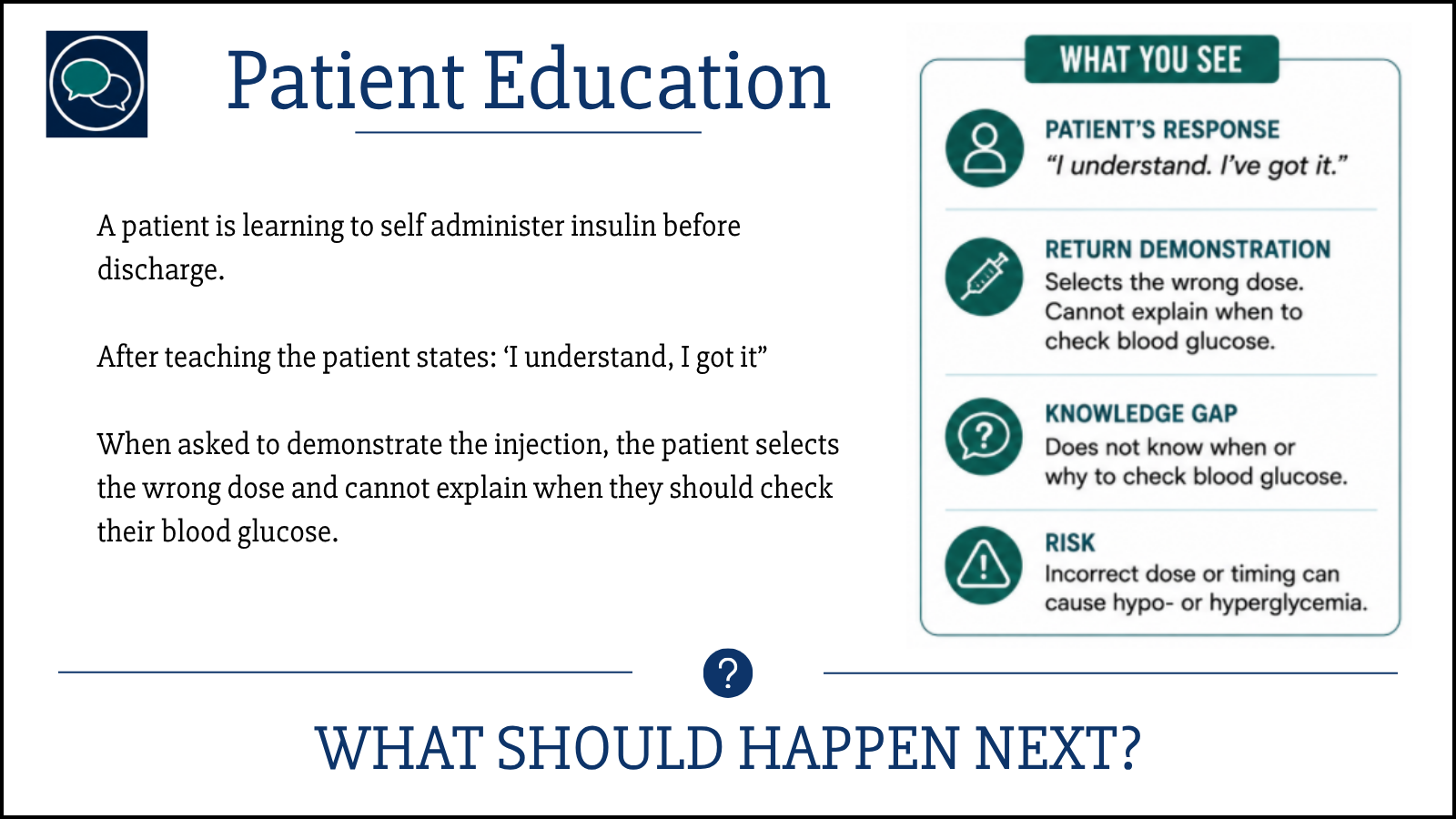
The nurse should reteach the information the patient has not demonstrated correctly, then reassess understanding with another return demonstration and teach-back.Why this matters:
The patient says, “I understand,” but their actions show otherwise. Selecting the wrong insulin dose and being unable to explain when to check blood glucose indicate that the patient is not yet ready to safely manage the medication independently.The nurse should identify where the misunderstanding occurred, provide additional teaching using clear, patient-centered instructions, and then ask the patient to demonstrate the skill again and explain the key information in their own words.
Simply repeating the same instructions or asking, “Do you understand?” is not enough. The nurse needs evidence that the patient can correctly perform the skill and apply the teaching before discharge.
CLINICAL JUDGMENT TAKEAWAY
Teaching isn't complete because information was given. Evaluate what the patient can actually explain and demonstrate and reteach when understanding isn't there yet.
-
Best Response:
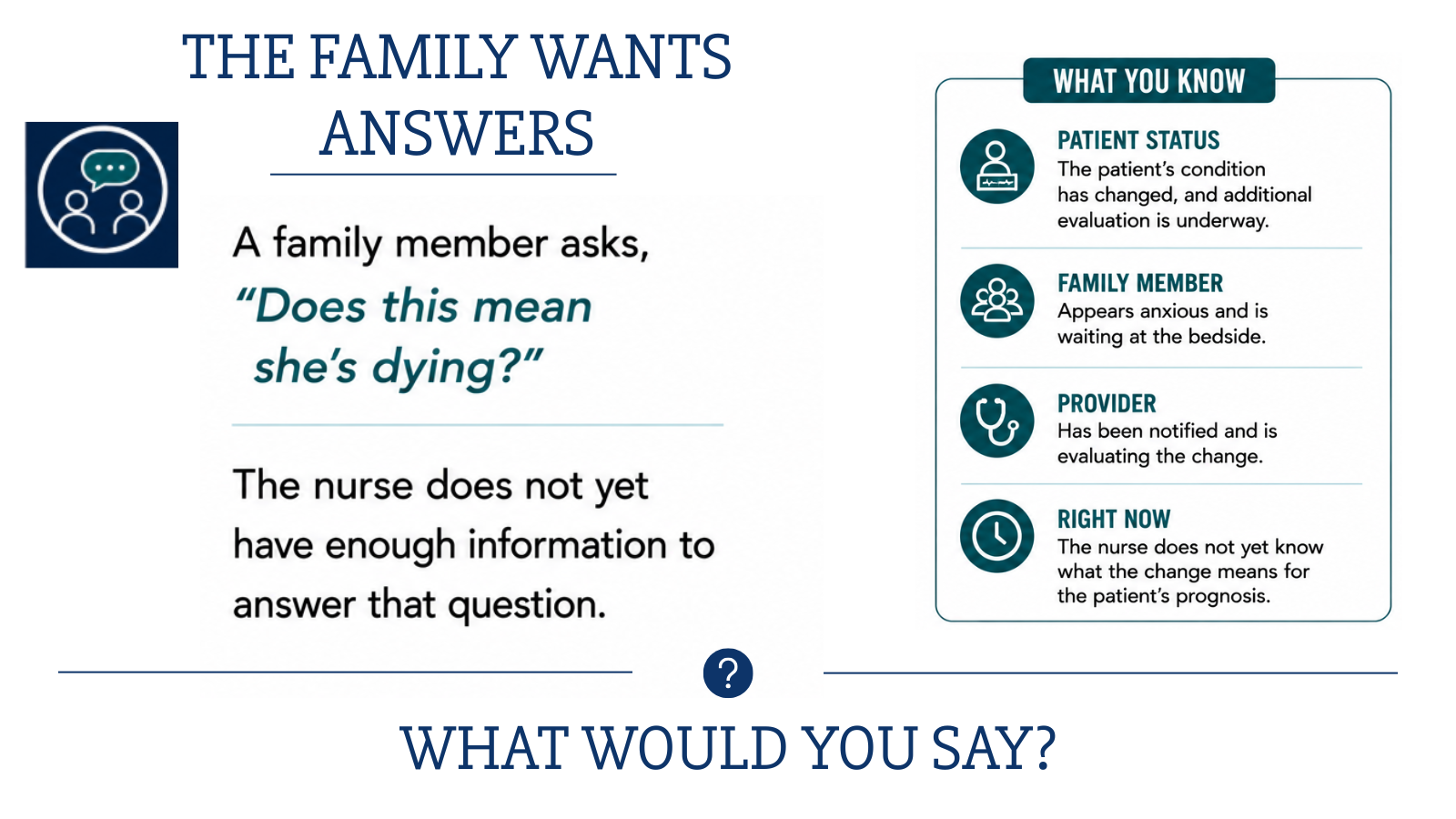
“I can see that you're worried. I don't have enough information yet to tell you what this change means. The provider is evaluating her now, and we'll update you as soon as we know more.”Why this matters:
The family member is asking a question the nurse cannot accurately answer yet. The nurse should not guess about the patient's prognosis or offer reassurance that may not be true.At the same time, simply saying “I don't know” can feel dismissive and does little to address the family's concern. A therapeutic response acknowledges the emotion, clearly explains what is known and unknown, and tells the family what is happening next.
The nurse can remain available for support and answer questions that can be answered accurately while the patient's condition is being evaluated.
Don't get distracted by:
Feeling like you need to provide an immediate answer because the family is distressed. It is appropriate to say that you don't know when you genuinely don't have enough information. What matters is how you communicate that uncertainty.CLINICAL JUDGMENT TAKEAWAY
Don't guess, overpromise, or give false reassurance. Be honest about what you know, acknowledge the concern, and communicate what is being done to get more information.
-
Best Response:
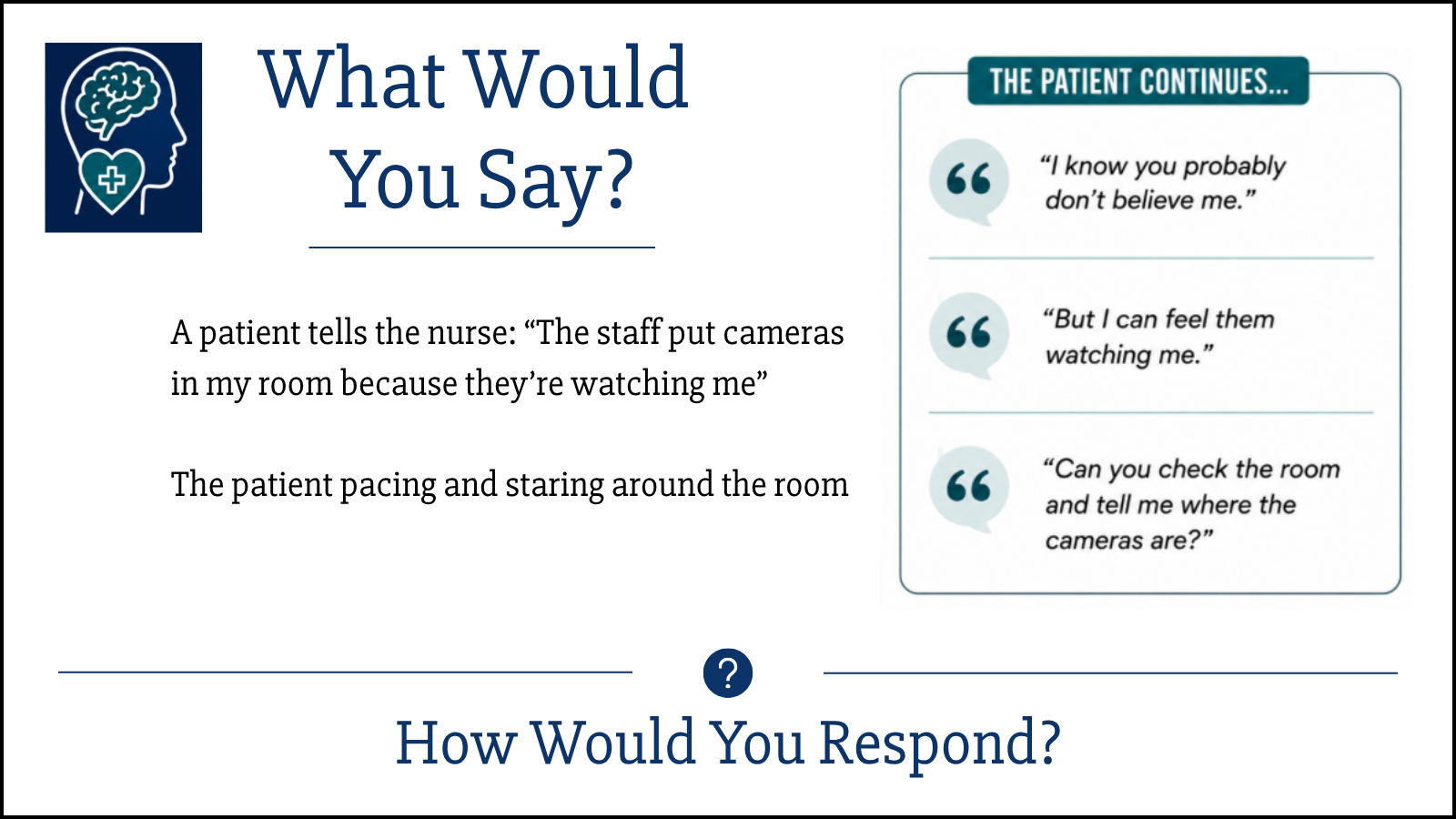
“It sounds like you're feeling watched, and that must be frightening. I don't see any cameras in the room, but I'm here with you.”Why this matters:
The patient's fear is real to them, even though the belief about the cameras is not based in reality. The nurse should acknowledge the emotion without agreeing with the belief.Telling the patient that the cameras are real reinforces the belief. Arguing, saying “That's ridiculous,” or trying to prove the patient wrong can increase anxiety and damage trust. Searching the room for cameras could also reinforce the idea that cameras might actually be present.
Instead, the nurse can acknowledge the patient's distress, calmly present reality, and communicate safety and presence.
Don't get distracted by:
Trying to convince the patient that the belief is false. The goal isn't to win an argument about what is real. The goal is to respond therapeutically without reinforcing the belief.CLINICAL JUDGMENT TAKEAWAY
Acknowledge the feeling without validating the delusion. Present reality calmly, avoid arguing, and focus on the patient's emotions and sense of safety.
-
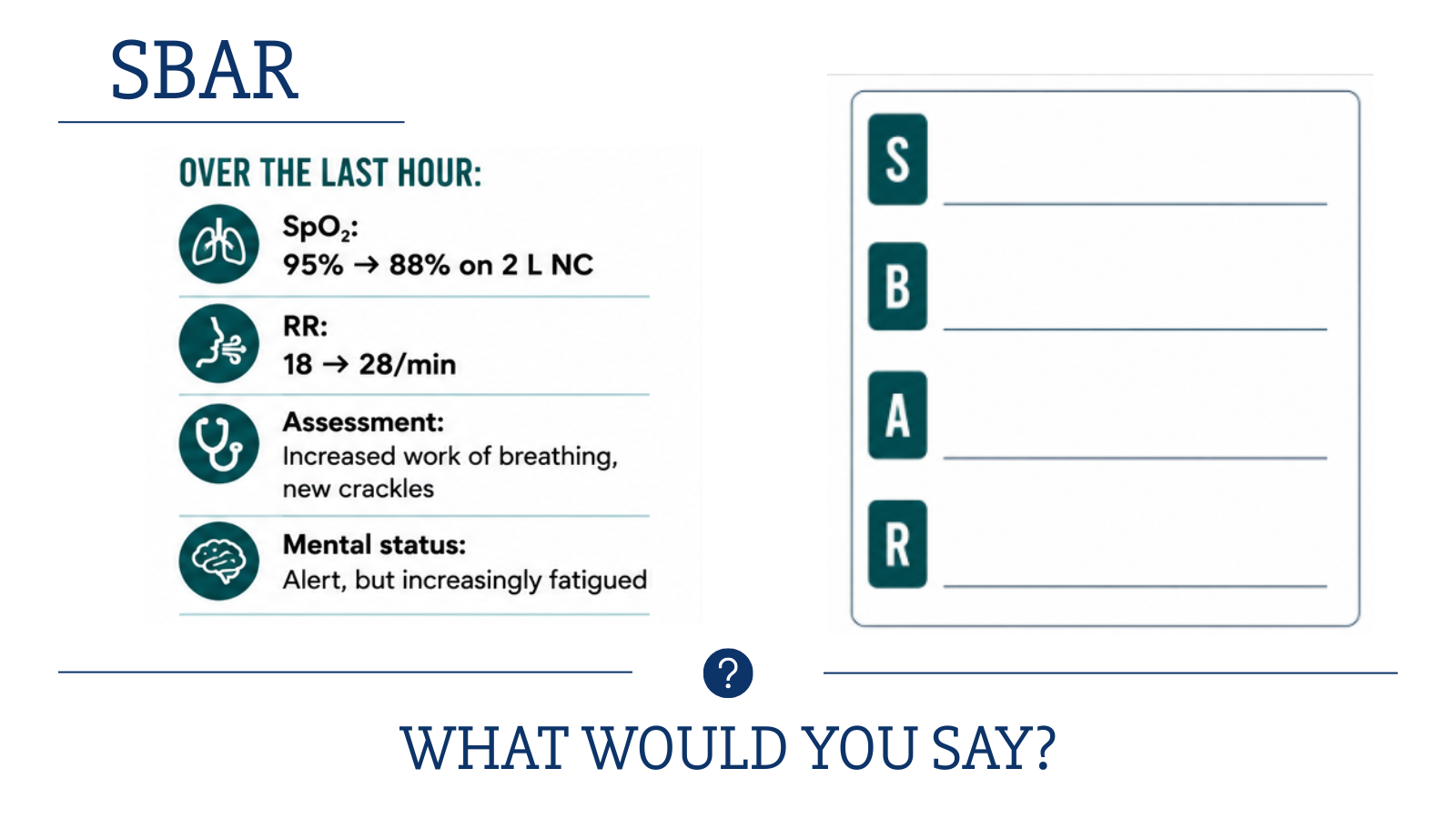
SBAR Report:
S — Situation
“This is the nurse calling about a patient admitted with pneumonia. I’m concerned because their respiratory status has worsened over the last hour.”B — Background
“The patient is being treated for pneumonia and is currently receiving oxygen at 2 L/min by nasal cannula.”A — Assessment
“Over the last hour, their oxygen saturation has dropped from 95% to 88% on 2 liters. Respiratory rate has increased from 18 to 28 per minute. They now have increased work of breathing and new crackles, and although they are alert, they are becoming increasingly fatigued.”R — Recommendation
“I would like you to evaluate the patient now and provide additional orders for the worsening respiratory status.”Why This Matters
A good SBAR does more than list abnormal findings. It communicates what has changed, why you are concerned, and what you need from the person receiving the report.
The report focuses on the information that matters to the current problem.
CLINICAL JUDGMENT TAKEAWAY
Good communication is focused communication. Report the change, support your concern with relevant findings, and clearly communicate what you need next.
-
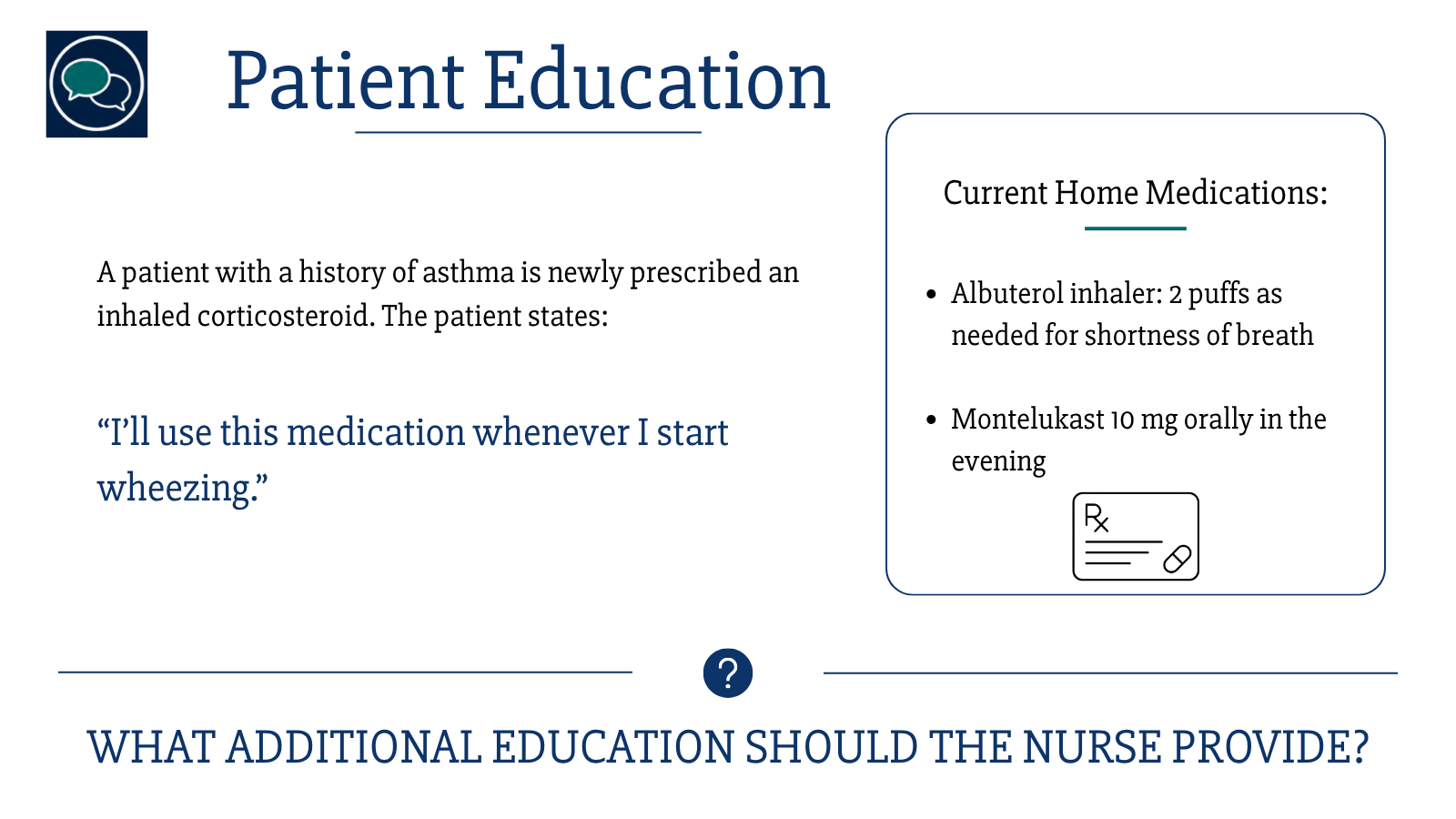
The patient is treating the new inhaled corticosteroid like a rescue medication, but these medications serve different purposes.
Inhaled corticosteroids are a cornerstone of long-term asthma management because of their potent anti-inflammatory effects. They help reduce airway inflammation, decrease the frequency and severity of exacerbations, and help prevent airway remodeling.
They are not intended for immediate relief of acute symptoms. Their therapeutic effects develop over time and may take days to weeks to reach full benefit. The patient should use the inhaled corticosteroid consistently as prescribed, not only when wheezing occurs.
The patient's albuterol inhaler is the rescue medication intended to provide quick relief of acute symptoms such as wheezing or shortness of breath.
The nurse should also teach the patient to rinse the mouth after each use of the inhaled corticosteroid to reduce the risk of oral candidiasis.
CLINICAL JUDGMENT TAKEAWAY
Don't just teach a patient how to take a medication. Make sure they understand why they're taking it, when to use it, what to expect from it, and how it differs from their other medications.